The Essential Guide To Understanding CC Vs. BCC
 Sophia Terry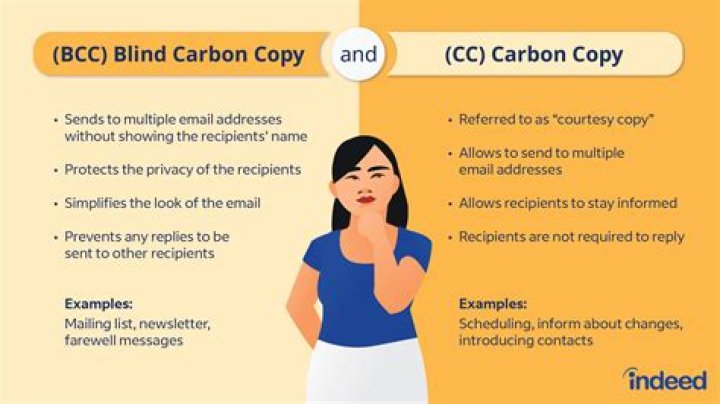
Ever wondered about the difference between CC and BCC when sending an email?
CC and BCC are two commonly used fields in an email, but many people are unsure of the difference between the two. CC stands for "carbon copy," while BCC stands for "blind carbon copy." The main difference between the two is that CC recipients can see who else is on the email, while BCC recipients cannot.
When should you use CC and BCC? CC should be used when you want to keep someone informed about an email conversation, but they don't need to take any action. For example, you might CC your boss on an email to a client if you want them to be aware of the conversation. BCC should be used when you want to send an email to multiple people without them knowing who else is on the email. For example, you might BCC a group of people on an email if you don't want them to know who else is on the email list.
Using CC and BCC correctly can help you to manage your email communication more effectively. By understanding the difference between the two, you can ensure that your emails are being sent to the right people and that your privacy is being protected.
CC vs BCC
When sending an email, you have the option of using the CC and BCC fields. CC stands for "carbon copy," while BCC stands for "blind carbon copy." Both fields allow you to send a copy of the email to additional recipients, but there are some key differences between the two.
- Visibility: CC recipients can see who else is on the email, while BCC recipients cannot.
- Reply: CC recipients can reply to all recipients of the email, while BCC recipients can only reply to the sender.
- Privacy: BCC is more private than CC, as BCC recipients cannot see who else is on the email.
- Use cases: CC is typically used to keep people informed about an email conversation, while BCC is typically used to send an email to multiple people without them knowing who else is on the email list.
Here are some examples of how CC and BCC can be used:
- You might CC your boss on an email to a client if you want them to be aware of the conversation.
- You might BCC a group of people on an email if you don't want them to know who else is on the email list.
- You might BCC yourself on an email if you want to keep a copy of the email for your records.
Using CC and BCC correctly can help you to manage your email communication more effectively. By understanding the difference between the two, you can ensure that your emails are being sent to the right people and that your privacy is being protected.
Visibility: CC recipients can see who else is on the email, while BCC recipients cannot.
The visibility of CC and BCC recipients is a key difference between the two fields. CC recipients can see who else is on the email, while BCC recipients cannot. This can be important for privacy reasons, as BCC recipients may not want others to know that they are receiving the email.
For example, you might use BCC to send an email to a group of people if you don't want them to know who else is on the email list. This could be useful for sending sensitive information, such as financial data or personal information.
It's important to note that BCC is not a foolproof way to ensure privacy. If a BCC recipient forwards the email to someone else, that person will be able to see who else was on the original email list.
Overall, the visibility of CC and BCC recipients is an important factor to consider when sending an email. By understanding the difference between the two, you can ensure that your emails are being sent to the right people and that your privacy is being protected.
Reply: CC recipients can reply to all recipients of the email, while BCC recipients can only reply to the sender.
The ability to reply to all recipients of an email is a key difference between CC and BCC. CC recipients can reply to all recipients of the email, while BCC recipients can only reply to the sender. This can be important for managing email conversations and ensuring that everyone is on the same page.
- Collaboration: CC recipients can collaborate more easily on email conversations, as they can reply to all recipients and keep everyone in the loop. This can be useful for projects or tasks that require input from multiple people.
- Privacy: BCC recipients have more privacy, as they can only reply to the sender. This can be useful for sending sensitive information, such as financial data or personal information.
- Organization: CC recipients can help to organize email conversations, as they can see who else is on the email and can reply to the appropriate people.
- Efficiency: BCC recipients can save time, as they only need to reply to the sender and not to all recipients of the email.
Overall, the ability to reply to all recipients of an email is an important factor to consider when sending an email. By understanding the difference between CC and BCC, you can ensure that your emails are being sent to the right people and that your privacy is being protected.
Privacy: BCC is more private than CC, as BCC recipients cannot see who else is on the email.
The privacy of BCC recipients is a key difference between CC and BCC. BCC recipients cannot see who else is on the email, which can be important for protecting sensitive information. For example, you might use BCC to send an email to a group of people if you don't want them to know who else is on the email list. This could be useful for sending financial data, personal information, or other sensitive information.
BCC is not a foolproof way to ensure privacy, however. If a BCC recipient forwards the email to someone else, that person will be able to see who else was on the original email list. Additionally, some email clients may show BCC recipients in the email headers, so it is important to check your email client's settings before using BCC to send sensitive information.
Overall, BCC is a more private way to send emails than CC. By understanding the difference between CC and BCC, you can ensure that your emails are being sent to the right people and that your privacy is being protected.
Use cases: CC is typically used to keep people informed about an email conversation, while BCC is typically used to send an email to multiple people without them knowing who else is on the email list.
The use cases for CC and BCC are an important aspect of the difference between the two fields. CC is typically used to keep people informed about an email conversation, while BCC is typically used to send an email to multiple people without them knowing who else is on the email list.
- Keeping people informed: CC is a good way to keep people informed about an email conversation, even if they don't need to take any action. For example, you might CC your boss on an email to a client if you want them to be aware of the conversation.
- Sending an email to multiple people without them knowing who else is on the email list: BCC is a good way to send an email to multiple people without them knowing who else is on the email list. For example, you might BCC a group of people on an email if you don't want them to know who else is on the email list.
Understanding the use cases for CC and BCC can help you to use the fields effectively and to manage your email communication more efficiently.
You might CC your boss on an email to a client if you want them to be aware of the conversation.
In the context of "CC vs BCC difference," understanding why you might CC your boss on an email to a client is crucial. CCing your boss keeps them informed about the conversation without requiring their direct involvement. This practice is common in various scenarios, highlighting the nuances of CC and BCC usage.
- Transparency and Accountability: CCing your boss demonstrates transparency and accountability in communication. It shows that you're keeping your superiors informed about your interactions with clients, fostering trust and collaboration.
- Knowledge Sharing: CCing your boss allows them to stay up-to-date on client conversations, even if they're not directly involved. This shared knowledge can benefit the team's overall understanding of client needs and preferences.
- Backup and Reference: The CC field serves as a record of who was included in the email conversation. If any questions or disputes arise later, the email trail provides clear documentation of who was informed and when.
- Contextual Awareness: CCing your boss keeps them in the loop, enabling them to provide valuable input or guidance if needed. Their insights can contribute to a more informed and effective client interaction.
In summary, CCing your boss on an email to a client serves several purposes. It fosters transparency, facilitates knowledge sharing, provides a record of communication, and allows for timely support when necessary. Understanding these nuances helps you utilize CC and BCC effectively in your email communication.
You might BCC a group of people on an email if you don't want them to know who else is on the email list.
In the context of "cc bcc difference," understanding why you might BCC a group of people on an email highlights the key distinction between CC and BCC. BCC, or blind carbon copy, is used to send an email to multiple recipients without revealing their identities to each other. This practice is common in various scenarios, and exploring its nuances helps clarify the usage of CC and BCC.
- Privacy and Confidentiality: BCC protects the privacy of recipients by concealing their identities from one another. This is particularly useful when sending sensitive information or when you want to maintain confidentiality among certain individuals.
- Targeted Communication: BCC allows you to send a message to a specific group of people without involving others who may not need to be informed. This targeted approach ensures that only the intended recipients receive the email.
- Anonymity: BCC can provide anonymity to the sender, especially when sending emails to large groups or public forums. It prevents the sender's email address from being visible to all recipients.
- Spam Prevention: BCC can help reduce spam by hiding recipients' email addresses from potential spammers. This helps protect their privacy and prevents their addresses from being harvested.
In summary, BCC is used to send emails to multiple recipients while maintaining their privacy and anonymity. Understanding this facet of BCC helps differentiate it from CC and enables effective and appropriate use of both fields in email communication.
FAQs on CC and BCC
This section addresses common questions and misconceptions surrounding the use of CC and BCC in email communication.
Question 1: What is the primary difference between CC and BCC?
Answer: CC (carbon copy) recipients can see all other recipients of an email, while BCC (blind carbon copy) recipients cannot see who else received the email.
Question 2: When should I use CC?
Answer: CC should be used when you want to keep someone informed about an email conversation, but they don't need to take any action.
Question 3: When should I use BCC?
Answer: BCC should be used when you want to send an email to multiple people without them knowing who else is on the email list.
Question 4: Is BCC more secure than CC?
Answer: While BCC can help protect the privacy of recipients by hiding their identities from each other, it is not a foolproof security measure. If a BCC recipient forwards the email, the other recipients' identities may be revealed.
Question 5: Can I reply to all recipients of an email if I am BCC'd?
Answer: No, BCC recipients can only reply to the sender of the email.
Question 6: What are some best practices for using CC and BCC effectively?
Answer: Use CC sparingly to avoid overwhelming recipients with unnecessary emails. Use BCC when privacy or confidentiality is a concern. Consider using "undisclosed recipients" in the BCC field to inform recipients that their identities are being concealed.
Summary: Understanding the difference between CC and BCC and using them appropriately can enhance the effectiveness and privacy of your email communication.
Transition to the next article section: For more detailed information on email etiquette and best practices, refer to our comprehensive guide.
Conclusion
Understanding the difference between CC and BCC is crucial for effective and professional email communication. CC (carbon copy) keeps recipients informed, while BCC (blind carbon copy) maintains privacy by concealing recipient identities.
Use CC judiciously to avoid overwhelming recipients and BCC when confidentiality or privacy is paramount. Remember, BCC recipients cannot see who else received the email and can only reply to the sender. By adhering to these best practices, you can ensure that your email communication is clear, respectful, and secure.